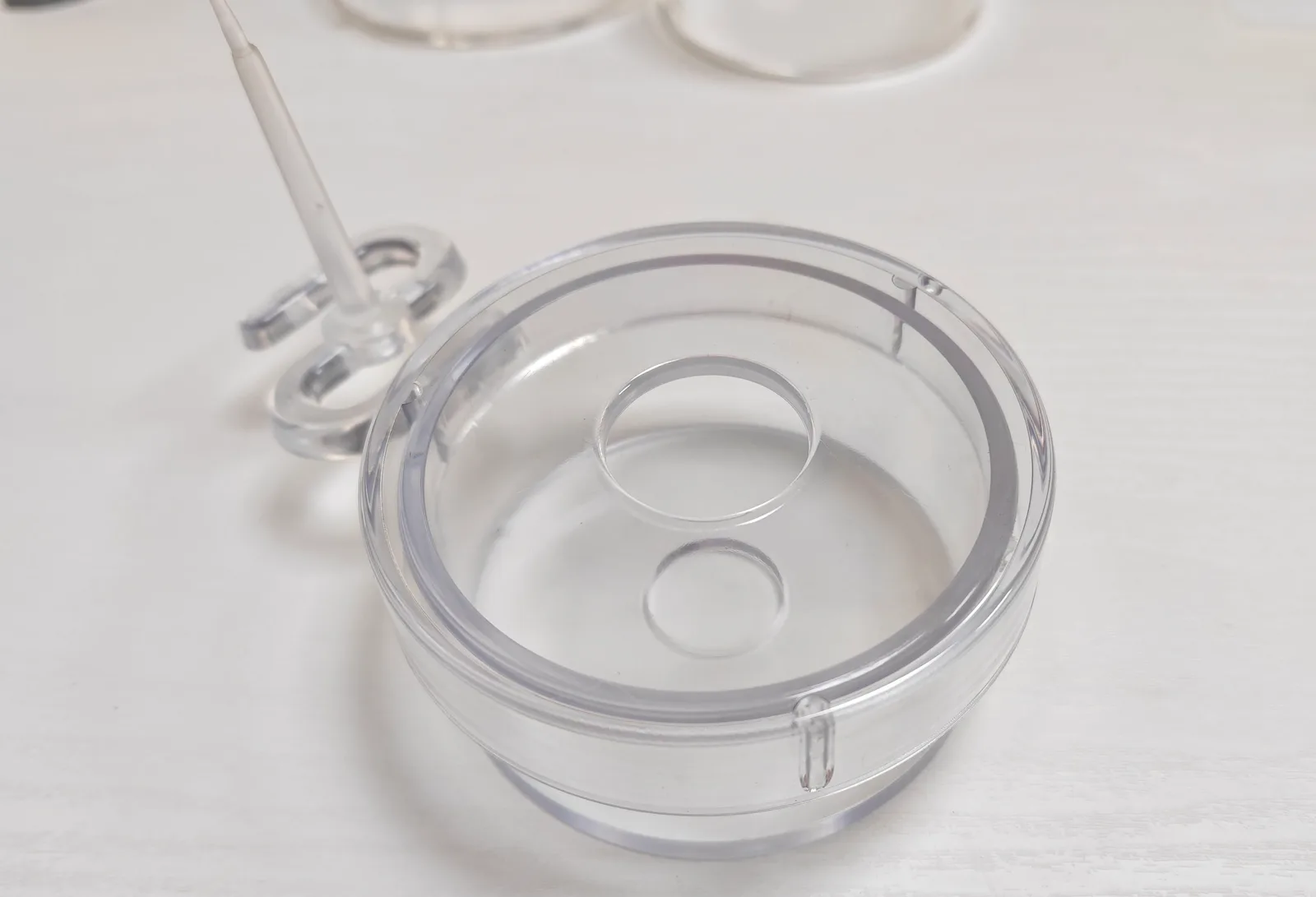
Custom Equipment Guards at Volume: From Handmade Acrylic to Injection Molding, Lead Time Cut to 1 Day per Batch
Project Background
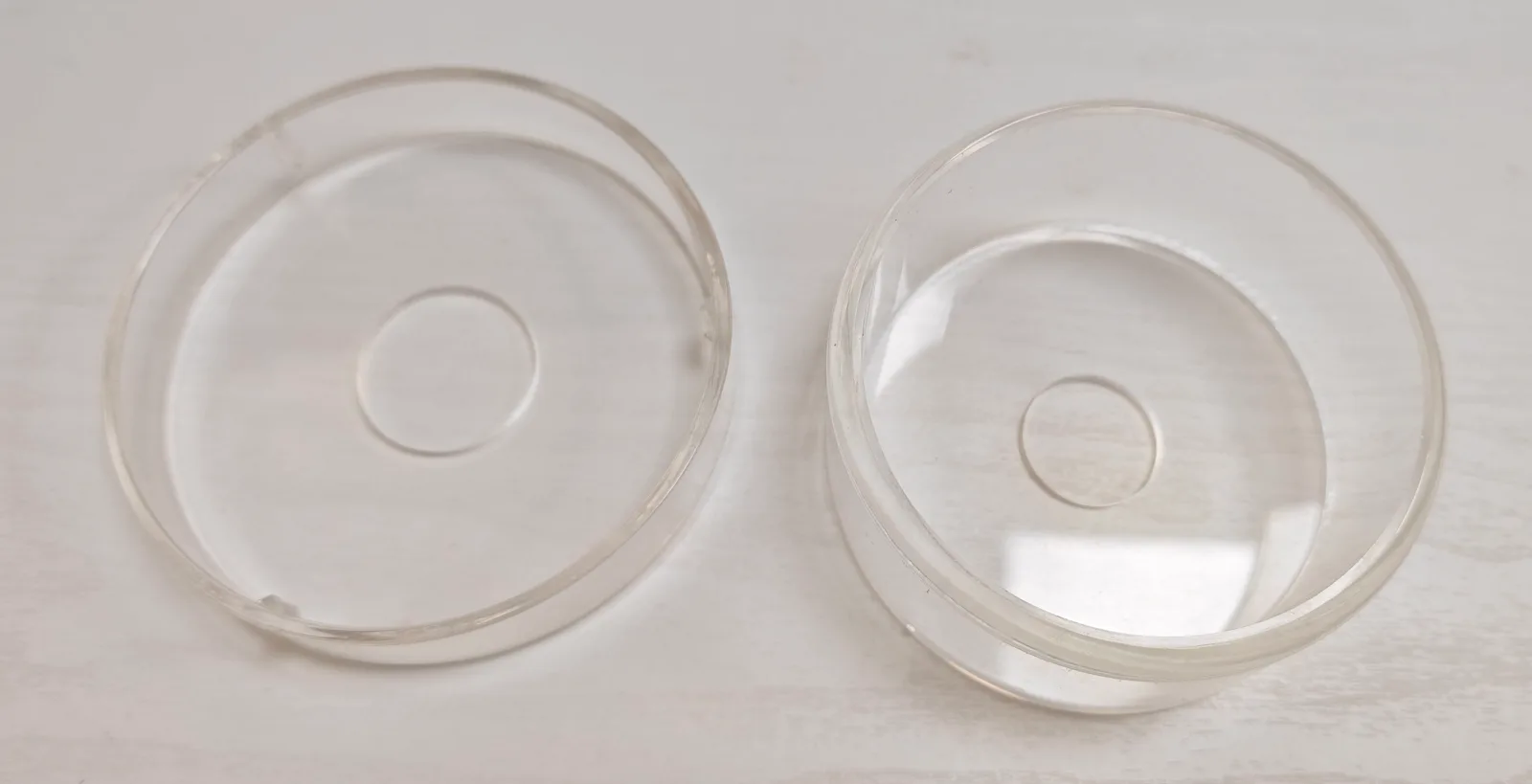
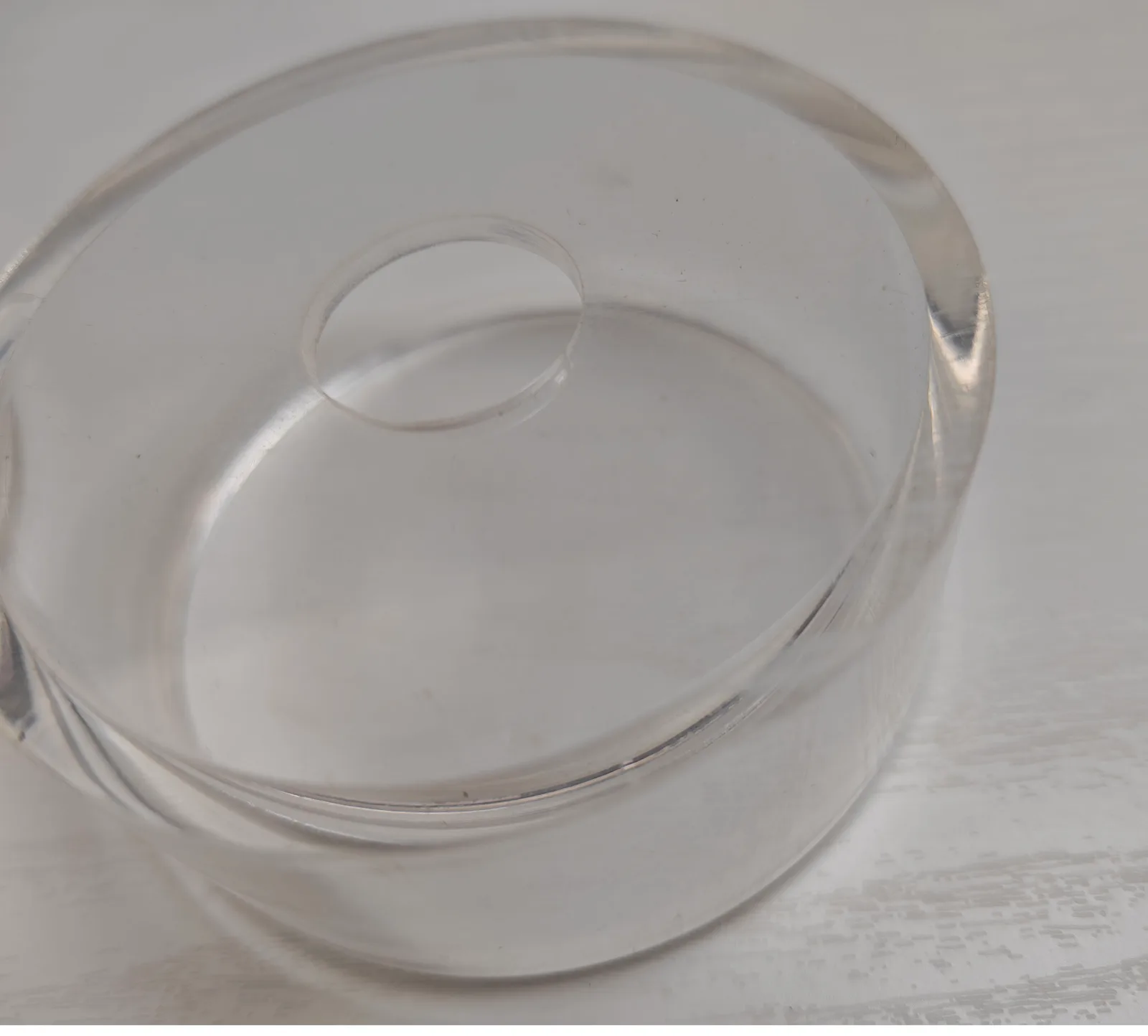
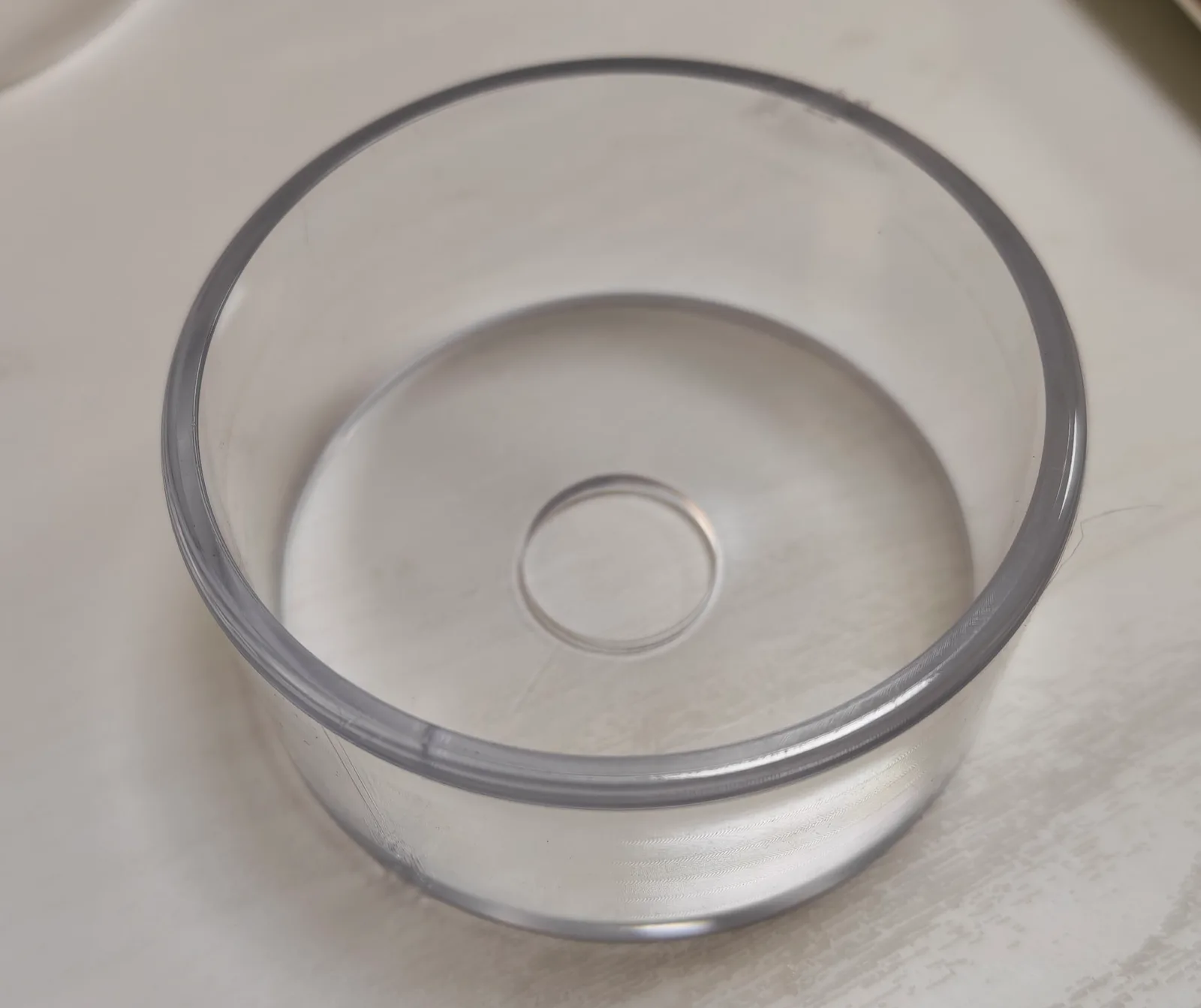
The customer needed volume production of protective covers for their end equipment. The structure is not complex — just two parts, a base and a lid — but the requirements were specific: a stable interference fit between lid and base, snug and rattle-free after assembly while still allowing repeated opening and closing; and the end customer had high expectations for clarity, cosmetic detail, and batch-to-batch consistency.
The defining characteristics of the project were volume plus short lead time: 1,000 pieces per batch, with continuous repeat batches and very tight deadlines.
Four Pain Points of the Original Approach
The part had previously been made by hand from acrylic, and problems surfaced one after another in actual delivery:
- Inconsistent dimensions: The body was cut from round tubing, and tubing itself varies in size from batch to batch; combined with the accumulated error of hand bonding, every piece in a batch differed slightly. An interference fit is extremely sensitive to dimensions — handmade parts cannot hold a consistent interference, so lids and bases were not interchangeable and had to be matched piece by piece, which made assembly on the customer’s line very inefficient.
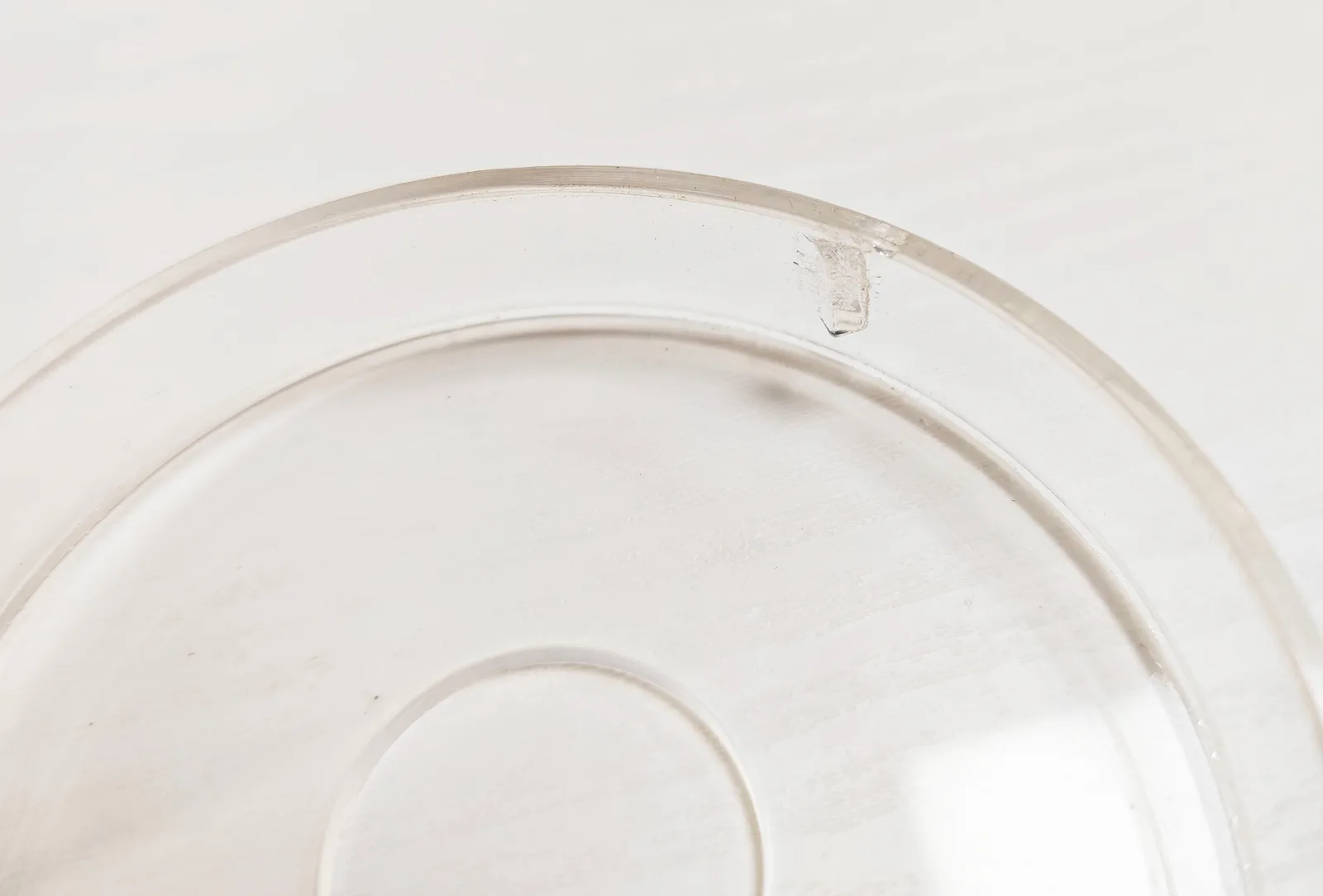
- Rough detailing: Edges, radii, and hole positions were finished inconsistently, and appearance fell short of the end customer’s requirements.
- Weak bond strength: The snap features on the lid were held by adhesive and frequently came loose in use, making them the leading source of after-sales complaints.
- Uncontrollable lead times: Handmade capacity was limited, and the 15-day lead time per batch was still frequently missed, directly disrupting the customer’s machine delivery schedule.
Why Injection Molding Was Ultimately Chosen Over Handmade Production
The customer had approached several suppliers in search of a more specialized direct source factory for acrylic products, and was referred to Cremage by an industry peer.
The assessment concluded that with Cremage’s manual and CNC capabilities, the part could absolutely meet the customer’s requirements if made by hand. But once volume and lead time were factored in, injection molding was the better answer for consistency, unit cost, and delivery cadence — so mold development plus injection molding was ultimately adopted.
This rests on a structural advantage at Cremage — no limits on process: the company holds the full set of capabilities in-house, including hand fabrication, precision CNC machining, injection molding, and its own mold shop. The process route can therefore be chosen entirely around the customer’s quantity, lead time, cost, and operating conditions, without splitting one product across multiple suppliers and coordinating back and forth. Handmade for small volumes, injection molding for larger ones — judged and executed by a single supplier.
Results
After structural evaluation and mold development, the part moved into injection molding production, and each of the original four pain points was resolved:
- Dimensional consistency: Molded forming replaced tubing variation and accumulated hand-work error; lids and bases are fully interchangeable with no matching at assembly, and the interference repeats consistently from batch to batch;
- Detail and appearance: Radii, holes, and edges are formed in a single shot, giving uniform, consistent detail;
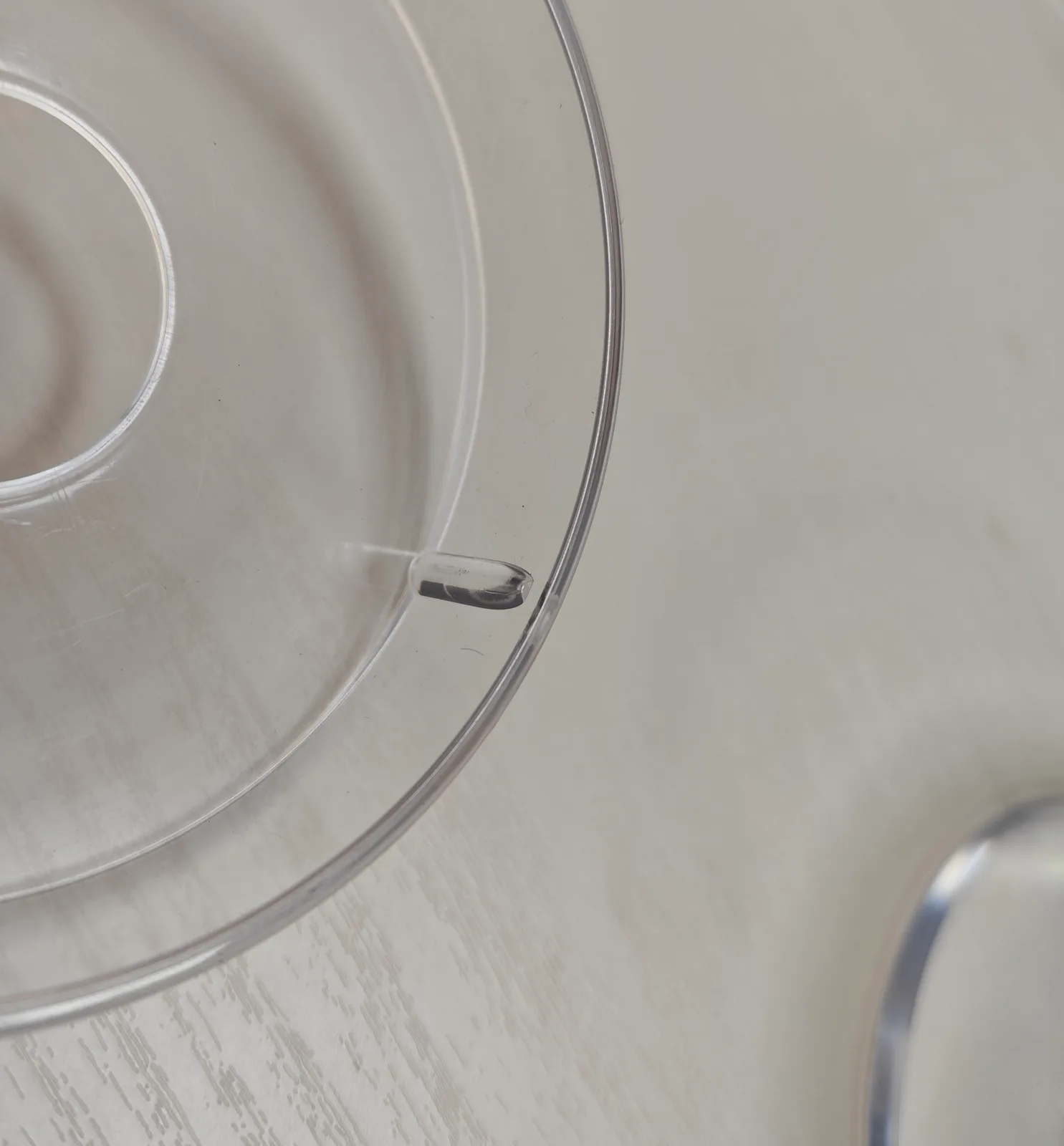
- Snap-fit reliability: The snap-fit is molded integrally, no longer relying on adhesive, structurally eliminating the risk of detachment;
- Lead time: For 1,000 pieces per batch, lead time dropped from 15 days with handmade production to 1 day, and it repeats reliably.
Material Can Be Switched by Application: Acrylic / PC
With the same mold and structure, the material can be switched flexibly to suit the application:
- Acrylic (PMMA): Clear and attractive, suited to standard applications with high demands on appearance and visibility;
- PC (polycarbonate): Tough and impact-resistant, suited to load-bearing or impact-prone applications.
On this project, switching some higher-load applications to PC sharply reduced the customer’s damage losses — the parts resist cracking when dropped or struck, something acrylic cannot match.
Before-and-After Comparison
| Dimension | Original handmade acrylic approach | Cremage injection-molded approach |
|---|---|---|
| Dimensional consistency | Varies piece to piece, requires matching | Fully consistent, interchangeable without matching |
| Interference fit | Inconsistent interference | Assured by the mold, stable across batches |
| Snap-fit reliability | Adhesive-bonded, prone to coming loose | Integrally molded, no risk of detachment |
| Cosmetic detail | Rough and inconsistent | Clean, consistent detail and appearance |
| Lead time per batch (1,000 pcs) | 15 days, often late | 1 day |
| Material options | Acrylic only | Acrylic / PC switched by application |
Capabilities Summary
Cremage has specialized in precision acrylic and engineering plastics manufacturing for more than 30 years, with a full process range spanning hand fabrication and CNC machining through injection molding and mold development. We select processes and materials flexibly based on the customer’s quantity, lead time, and operating conditions, supplying parts to the automation, semiconductor, medical, and new energy industries.
If your product faces similar challenges — volume protective covers, an interference fit between base and lid, snap-fit structures, poor consistency from handmade parts, or lead times that cannot keep up — send us your drawings for evaluation, and we will recommend the best process and material.